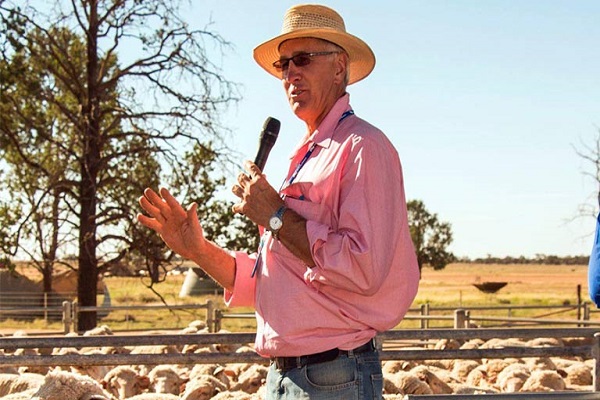
Elders analyst Richard Koch and senior livestock production advisor Rob Inglis team up to unpack what’s behind the slower-than-expected flow of lambs to market.
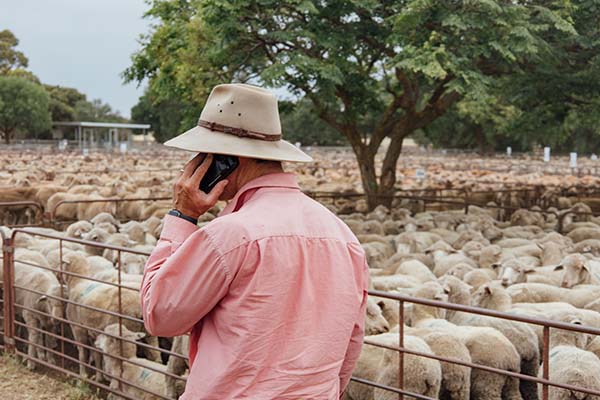
Improved seasonal conditions across many of Australia’s major lamb-producing regions have lifted lambing and marking percentages this year. While fewer ewes were joined, higher marking rates were expected to see lamb supplies increase on last year.
With spring now mostly behind us, that supply hasn’t materialised as expected. Lamb slaughter has barely climbed above last year’s levels, catching parts of the processing sector off guard and contributing to a counter-seasonal rise in prices over the past fortnight.
Talking to Elders stock agents across Australia, there doesn’t appear to be one answer.
Some lambs were sold early as stores into the growing lamb feedlot sector, while others have been shorn and returned to the paddock to make the most of abundant feed reserves. Increased numbers of ewe lambs are also being retained to help rebuild flock numbers.
There are also lambs still to come, but in some of the major southern producing regions they are simply taking longer than expected to reach desired slaughter weights.
Across south-west Victoria, south-east South Australia and central Victoria, there has been plenty of green feed available, but a lack of early clovers and starch has affected how quickly many lambs are finishing.
Feed testing undertaken by the Elders Livestock Production Advisory team at Groongal Station, Carrathool NSW, helps illustrate the issue.
Feed bulk was good at more than three tonnes per hectare, but quality had declined considerably. Dry matter digestibility had fallen by 13 per cent, crude protein by four per cent and water-soluble carbohydrates, or sugars, by 11 per cent. As a result, metabolisable energy had fallen from 11.3 MJ to 8.6 MJ.
The impact on livestock is twofold.
Lower digestibility means stock are unable to consume as much feed each day, with daily dry matter intake falling from around three per cent of bodyweight to around two per cent. At the same time, the decline in metabolisable energy means every mouthful is providing less energy.
Put simply, fewer mouthfuls and less energy per mouthful means less weight gain. If feed quality continues to decline, that can eventually turn into weight loss.
It highlights an important consideration when there appears to be plenty of feed in the paddock. Feed quantity is only part of the equation. Understanding its quality, and supplementing appropriately where needed, can be just as important in maintaining livestock performance.
As temperatures increase and pastures begin to harden, conditions should become more favourable for finishing lambs across southern production regions.
That could see more lambs reach slaughter weights and come onto the market towards the end of the year, potentially changing the supply dynamics behind recent price movements.
Beyond domestic supply, attention will also turn to export markets. Findings from a US International Trade Commission investigation into lamb imports are due on 13 November, with the outcome potentially having significant implications for the global sheepmeat trade and lamb pricing.
For now, the picture on the ground is more nuanced than the headline supply numbers might suggest. There are lambs in the paddock, but seasonal conditions are influencing when, and at what weight, they are likely to come to market.