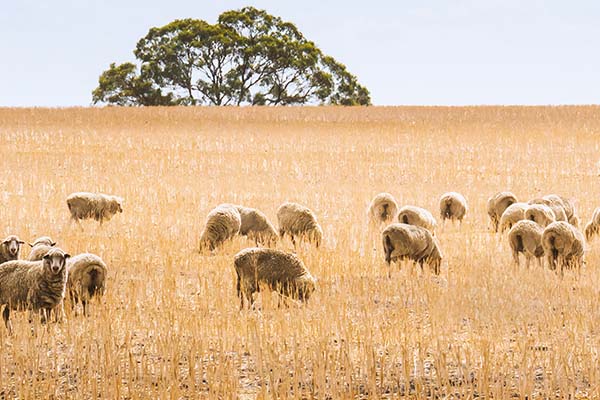
As spring pastures dry off across Australia, sheep producers enter one of the most critical operational windows of the year. Proactive summer management is vital to maintaining growth rates in young stock and building a rising plane of nutrition for ewes heading into autumn joining.
To safeguard flock performance and productivity, producers should focus on three key health pillars before the summer heat hits.
While winter rainfall drives general worm burdens, early summer presents specific biological threats. In summer-rainfall zones, ParaBoss warns that barber’s pole worm (Haemonchus contortus) can surge rapidly, causing lethal anaemia before clinical weight loss is visible1. Strategic ‘first summer drenches’ in winter-rainfall zones are vital for weaners to reduce pasture contamination, but they must be executed without accelerating chemical resistance by using a drench with an efficacy of at least 95 per cent, and ideally greater than 98 per cent.
Industry Protocol2: Follow WormBoss protocols by conducting a WormTest (Worm Egg Count) before treating. Avoid routinely drenching of adult ewes unless counts exceed critical regional thresholds. When drenching onto dry pastures or stubbles, use an effective multi-active combination drench, such as Tridectin. Verify its efficacy with a DrenchCheck (follow-up WEC) 10 to 14 days after treatment.
As green feed cures, pasture quality drops and its nutritional profile deteriorates. Dry pastures also affect digestibility, which may leave weaners highly vulnerable to changes to key nutrients, such as trace minerals and vitamins. Oral mineral drenches and licks often fail during high-demand periods due to variable daily intake and poor absorption, so injectable top-up mineral interventions are recommended ahead of critical production events.
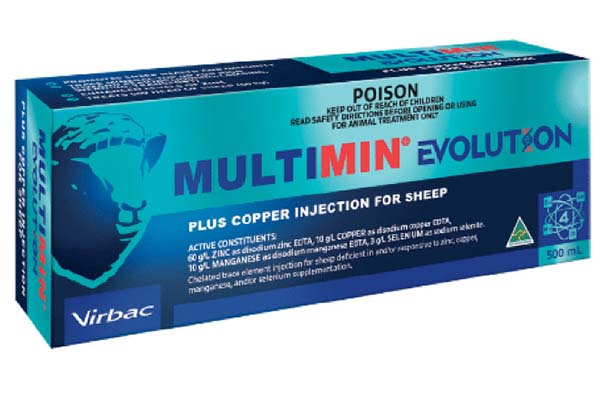
Industry Protocol: Target stock with Multimin Evolution for Sheep to rapidly boost trace element status before summer hits. Multimin Evolution for Sheep provides a higher dose of zinc than its predecessor, which is important since zinc is vital for fuelling high performance as well as being involved in growth, reproduction, skin and hooves, and immune function3-8. Multimin has been shown to increase weaning weights by an average of 2.3 kg9.
According to the NSW Department of Primary Industries (DPI)10, a sheep’s daily water consumption can be up to 40 per cent higher in summer than in winter. In addition, stock on dry pasture need increased water consumption to utilise the less digestible feed. Other factors that can affect water consumption include high evaporation rates in surface dams, which promote blue-green algae (cyanobacteria) blooms, and the temperature of the water, both of which affect palatability.
Industry Protocol11,12: When it comes to water for livestock in general, it’s important to focus on three key factors: requirements, water quality and infrastructure. This means testing water sources more frequently, ensuring your infrastructure can meet increased demands, and knowing what those demands are.
Summer flock health is built on data-driven, evidence-based management. By focusing on the right animal health treatments around parasite control and nutrition; and focusing on water security before high temperatures set in, producers can protect flock welfare and protect profit margins straight through to the autumn break.
References:
This article was written by Virbac for Seasons.
Disclaimer - important, please read:
Elders provides recommendations to the best of its knowledge and based on assumptions and information which it understands to be up to date, complete and accurate. If you are aware of any error or inaccuracy with the information on which this recommendation is based, you must immediately bring this to Elders’ attention. This recommendation is provided for your use only, and not that of any other third party. In some circumstances, the information Elders provided may be in summary form or derived from information sourced from third parties, however, Elders has not independently verified the information and cannot guarantee its accuracy.
You should always carefully evaluate all available information and consult Elders or another advisor further before you commit to any course of action or rely on any recommendation. Additionally, Elders expects that you will use your knowledge, experience and best judgement in relying on any recommendation and determining whether the recommendation is, and continues to be, appropriate. Elders do not accept liability or responsibility for any indirect, consequential or economic loss or damage of any kind arising from your acceptance or reliance on this recommendation. To the fullest extent permitted by law, all guarantees, warranties or implied terms and conditions are expressly excluded and Elders’ liability with respect to any services provided is limited to re-supply of the services, or the cost of having the services re-supplied. Elders may from time to time recommend products or services for which it may receive a financial incentive (rebate, commission, benefit, etc) from a supplier/manufacturer directly related to your purchase or use of that product or service.