
Initiated by a farming-member cooperative Regen Farmers Mutual, the Open Woodlands Regeneration Project is based in the Southern Tablelands of New South Wales. It is designed to help farmers plant sections of low‑density native revegetation, in ways that support long‑term livestock productivity goals, alongside environmental and financial outcomes.
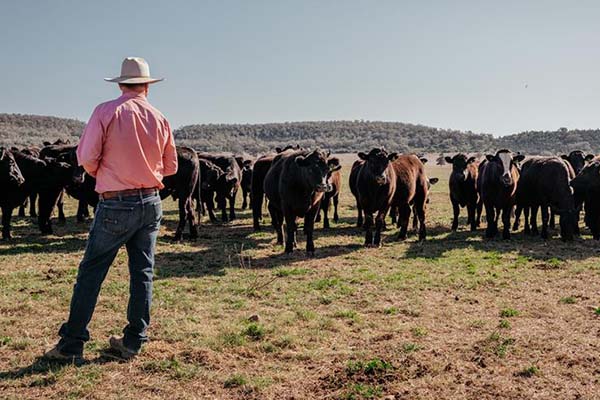
The project focuses on restoring native ecosystems in degraded, non-productive, or at‑risk areas on grazing properties, without converting highly productive farmland to forestry or changing the primary land use of grazing enterprises. In fact, the reintroduction of grazing into these planted sections is built into the operational plan of farmer’s projects.
Elders is a supporting partner in this project. Eligible landholders can access a $1,000 feasibility grant to properly assess environmental planting opportunities on their property. This takes into account the short-term impact to grazing operations, establishment costs, revenue from carbon stored the new plantings, and benefits to both stock and property biodiversity scores.
The feasibility considers:
Elders Carbon Farming Program Manager Joseph Siebert said the project is about practical integration rather than land use change.
“It’s not about forests instead of farms, it’s about looking at how combinations of open pasture and native revegetation can be incorporated into grazing production, and the animal production, financial incentives, and environment benefits that come from that,” Joseph said.
The feasibility report is designed to give you clear, property‑specific information so you can decide whether revegetation and carbon project participation make sense for your operation. There is no obligation to proceed beyond the assessment.
“If you who are considering revegetation work on your property anyway, you may as well consider the carbon credit benefits that can come with that planting, for cost recovery or reducing their own farm emissions,” Joseph said.
Our Carbon Farming team will work directly with you to provide independent feasibility assessments and project advice.
Importantly, Elders and Regen Farmers Mutual do not ask the landowner for an equity share in carbon credits and do not have ownership of any planting areas or land. The control is firmly in the farmers hands.
“The focus is on helping farmers understand the opportunities, requirements and trade‑offs before making any decisions,” Joeseph added.
If you are interested, first check your eligibility based on your location, as this funding is for the Southern Tablelands region of NSW. If your farm is eligible, you can complete the EOI fields, mention that you are an Elders client, and we will contact you to verify your interest and outline next steps.
To qualify you'll need to be an eligible landholder involved in commercial grazing operations in the Southern Tablelands area in NSW. You will typically have a landholding of 100ha or more and already be interested in the potential benefits of revegetating areas of your farm. Typically, the potential size of revegetated areas on your property is in the range of 5 to 20ha combined, but there is flexibility on total area and distribution.
The grant covers the cost of evaluating the opportunity for commencing an ACCU scheme carbon credit project on a property. It provides the landowner a feasibility assessment so you can consider if it is right for you. It does not provide funding for the trees and shrubs.
There are two grants on offer specifically. The first is a $1,000 Environmental Planting Feasibility Report grant. Recipients of the first grant can also then apply for a second $10,000 grant to contribute to the costs of a Carbon Project Design and Registration if you want to proceed with a planting project.
Eligible planting areas range from five hectares to 200 hectares under this project. The intention is not to replace productive grazing land or convert farms to forestry. Larger planting areas, such as 200 hectares, would need to be on very large properties (typically over 1,000 hectares). Areas smaller than five hectares are not eligible for this grant, although carbon projects can technically start from as little as 0.2 hectares.
Approval from the EOI stage is quick. If you are eligible, you will be contacted within a few days to confirm details and explain what support you will receive.
Once approved, the Elders TESA team and your local Elders representative will meet with you to explain the feasibility process, specifically where and what type of revegetation makes sense on your farm, and what a carbon credit scheme involves. There is no obligation to proceed with a carbon project after receiving the report, it is designed as a fact‑finding exercise.