
As the Australian beef industry shifts towards more feed lotting, ensuring young cattle arrive healthy and resilient is essential for optimal productivity and animal welfare.
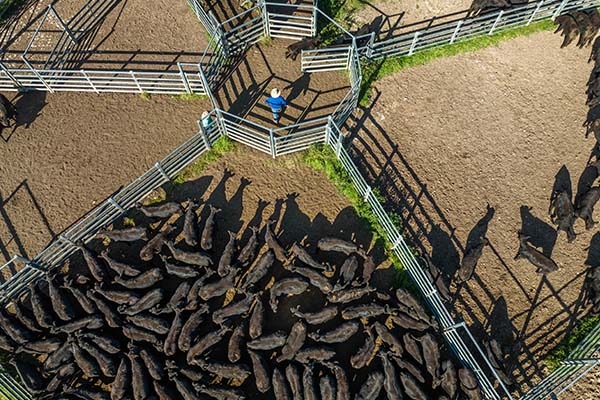
Bovine Respiratory Disease (BRD) has become the most common health problem in feedlot cattle and poses significant threats during this transition.
Fortunately, with strategic management and the addition of Bovi-Shield® MH-One and Rhinogard® IBR to your vaccination program can help producers set their young cattle up for success and have them ready to perform well in both farm and feedlot environments.
BRD is no longer just a ‘feedlot disease’. It’s a threat at every stage of beef production, especially during stressful events like weaning, transport, commingling and induction into new environments. Each stress event can compromise immune function, making cattle susceptible to respiratory viruses like Infectious Bovine Rhinotracheitis (IBR) and bacteria such as Mannheimia haemolytica (MH). The cost to the producer is significant:
Often, the disease is masked until feedlot and abattoir surveillance. Even after cattle have been through feedlots, carcass inspection reveals twice as many cattle with lung lesions (BRD) as were visibly sick on the farm⁴. This means invisible losses can erode profitability and reputation. For young cattle, known for their growth potential, any setback between weaning and feedlot entry can mean massive losses for producers.
Stress is the primary trigger for BRD. Events such as weaning, transportation, cohort mixing and dietary changes all compromise immune defences, allowing viruses and bacteria to take hold. Infectious Bovine Rhinotracheitis (IBR) and Mannheimia Haemolytica (MH) have been the agents most isolated. Both are commonly present in Australian herds⁵ and are capable of turning healthy cattle into a sick animals in a short period of time.
Rhinogard® IBR
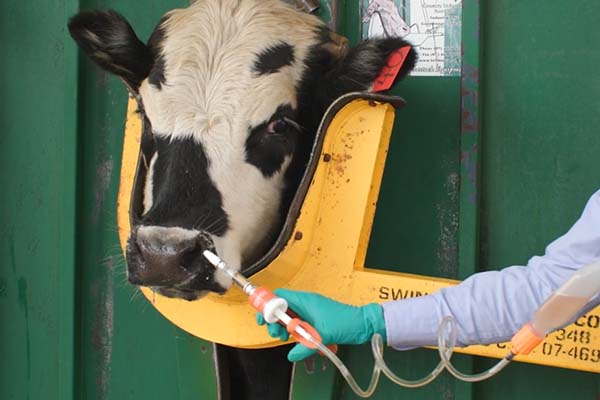 Cow receiving a nasal application of Zoetis Rhinogard.
Bovi-Shield® MH-One
Administering both vaccines at or prior to weaning and feedlot entry offers broad protection at multiple stages of the BRD disease cascade. Rhinogard tackles IBR, a key viral threat early, while Bovi-Shield prevents secondary bacterial pneumonia. Ensuring calves are correctly vaccinated with a clostridial vaccine, for example 5-in-1 or 7-in-1, ticks the boxes for the Immune Ready⁶ program and ensures your weaners are not only Immune Ready but also “feedlot ready”.
Vaccination is only one piece of the puzzle. The following management practices are essential for preparing your weaner cattle for the feedlot:
Optimal weaning
Nutrition
Parasite control
Drench weaners with an effective product such as Dectomax-V at induction to control worms, as these can significantly reduce daily weight gain.
Low-stress handling
Use low-stress stock handling techniques during movement and yarding to minimise physiological stress and accustom cattle to regular handling.
Environmental management
Minimise dust and mud in yards.
Record keeping
Document all vaccinations and complete the National Cattle Health Declaration when the cattle are sold, as per Immune Ready guidelines.
Producers who vaccinate with Bovi-Shield MH-One and Rhinogard IBR at weaning and before feedlot entry report:
“Any setback between weaning and feedlot entry could mean massive losses. To prevent meat quality and marbling losses, it’s vital to get on top of BRD early on with the one-time program of Rhinogard IBR and Bovi-Shield MH-One.” — Scott McMahon, NSW cattle producer.
Pre-vaccination protocols are mandatory for many commercial feedlot operations. Administration of a single dose of Rhinogard IBR, in conjunction with Bovi-Shield MH-One, provides effective coverage against IBR and MH respectively. This combined approach supports respiratory disease prevention and aligns with the best practices for maximising feedlot health and market access. Check with your feedlot buyer on their individual requirements.
Healthy weaner cattle are not just a product of good genetics; they’re the result of proactive management and vaccination. By implementing yard weaning combined with robust nutritional and parasite control, and a targeted vaccination protocol including Bovi-Shield MH-One and Rhinogard IBR, producers can ensure their weaners are resilient, productive and ready to thrive in lot feeding systems. A single dose of Rhinogard IBR and Bovi-Shield MH-One is a great fit for the pre-vaccination requirements of many feedlots.
The message is clear: prevention is easier, more effective and more profitable than treatment. Protect your young cattle before they enter the feedlot - your cattle, your business and your bottom line will thank you.
References
Article written by Dr Lee Taylor, Zoetis Senior Veterinary Technical Manager – Livestock, for Seasons.
Disclaimer - important, please read:
Elders provides recommendations to the best of its knowledge and based on assumptions and information which it understands to be up to date, complete and accurate. If you are aware of any error or inaccuracy with the information on which this recommendation is based, you must immediately bring this to Elders’ attention. This recommendation is provided for your use only, and not that of any other third party. In some circumstances, the information Elders provided may be in summary form or derived from information sourced from third parties, however, Elders has not independently verified the information and cannot guarantee its accuracy.
You should always carefully evaluate all available information and consult Elders or another advisor further before you commit to any course of action or rely on any recommendation. Additionally, Elders expects that you will use your knowledge, experience and best judgement in relying on any recommendation and determining whether the recommendation is, and continues to be, appropriate. Elders do not accept liability or responsibility for any indirect, consequential or economic loss or damage of any kind arising from your acceptance or reliance on this recommendation. To the fullest extent permitted by law, all guarantees, warranties or implied terms and conditions are expressly excluded and Elders’ liability with respect to any services provided is limited to re-supply of the services, or the cost of having the services re-supplied. Elders may from time to time recommend products or services for which it may receive a financial incentive (rebate, commission, benefit, etc) from a supplier/manufacturer directly related to your purchase or use of that product or service.