
It’s no secret that this season may present challenges for fertiliser management with global market volatility and supply constraints placing pressure on availability and pricing. While growers cannot control geopolitical or market forces, you can control the quality and precision of their fertiliser applications.
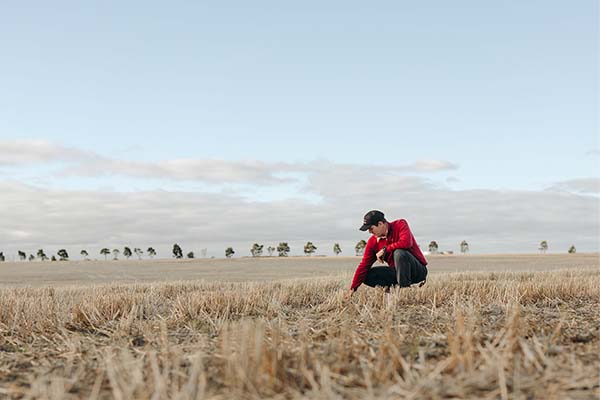
As Elders’ Chief Agronomist Alex Greetham explains, your focus this season should not be purely on reduction, but on prioritising the product where it delivers the strongest return.
Allocation decisions will matter more than ever this year. It’s not about cutting fertiliser at all costs, but about making informed choices to ensure fertiliser is used where it will be most effective.
Growers should prioritise paddocks with:
Where practical, fertiliser decisions should be staged rather than locked in upfront. Retaining flexibility will allow you to respond if supply conditions improve or the season unfolds differently than expected.
If fertiliser is expensive or constrained, soil testing is essential. Comprehensive soil testing, including deep Nitrogen assessments, provides the foundation for sound nutrient decisions.
Soil testing helps you to:
When fertiliser is scarce or expensive, the first question should always be "how much Nitrogen is already present in the soil profile?", not how much more needs to be purchased.
In some extreme cases, considering a reduction in planted area in favour of prioritising certain paddocks or crops may be warranted. This approach can help you protect margins by ensuring remaining paddocks are adequately fertilised, rather than spreading fertiliser too thinly and underperforming across the whole program.
This is not a blanket recommendation, rather a risk and budget alignment decision. Soil test data plays a critical role in making this a calculated and measured choice rather than an emotional response to market conditions.
This season, you may wish to place greater emphasis on crop selection and rotation planning. Where possible, you should prioritise crops with:
Rotational effects should also be considered. Following legumes or lower Nitrogen-demand crops can help reduce reliance on applied fertiliser, although this is not always feasible. Leveraging mineralisation becomes increasingly important in seasons where urea is restricted.
Pulses deserve serious consideration in paddocks with lower available Nitrogen. When disease, weed and market risks are properly managed, pulses can act as an effective risk management tool. Importantly, this approach complements soil testing rather than replacing it.
While the core principles of fertiliser management remain consistent, execution will vary by region, soil type and paddock history. Local conditions and consultation with an agronomist should guide final decisions. Each situation requires a tailored approach based on the best available information at the time.
Regardless of market conditions, strong engagement with an agronomist and disciplined decision-making remain essential. Relying on facts rather than assumptions allows fertiliser to be targeted where it delivers value, helping growers manage risk and maintain profitability in this landscape.
Disclaimer - important, please read:
Elders provides recommendations to the best of its knowledge and based on assumptions and information which it understands to be up to date, complete and accurate. If you are aware of any error or inaccuracy with the information on which this recommendation is based, you must immediately bring this to Elders’ attention. This recommendation is provided for your use only, and not that of any other third party. In some circumstances, the information Elders provided may be in summary form or derived from information sourced from third parties, however, Elders has not independently verified the information and cannot guarantee its accuracy.
You should always carefully evaluate all available information and consult Elders or another advisor further before you commit to any course of action or rely on any recommendation. Additionally, Elders expects that you will use your knowledge, experience and best judgement in relying on any recommendation and determining whether the recommendation is, and continues to be, appropriate. Elders do not accept liability or responsibility for any indirect, consequential or economic loss or damage of any kind arising from your acceptance or reliance on this recommendation. To the fullest extent permitted by law, all guarantees, warranties or implied terms and conditions are expressly excluded and Elders’ liability with respect to any services provided is limited to re-supply of the services, or the cost of having the services re-supplied. Elders may from time to time recommend products or services for which it may receive a financial incentive (rebate, commission, benefit, etc) from a supplier/manufacturer directly related to your purchase or use of that product or service.