Barber’s pole worm, Haemonchus contortus, is one of the major sheep parasites in Australia, causing significant economic and production losses, especially in areas with summer rainfall patterns.
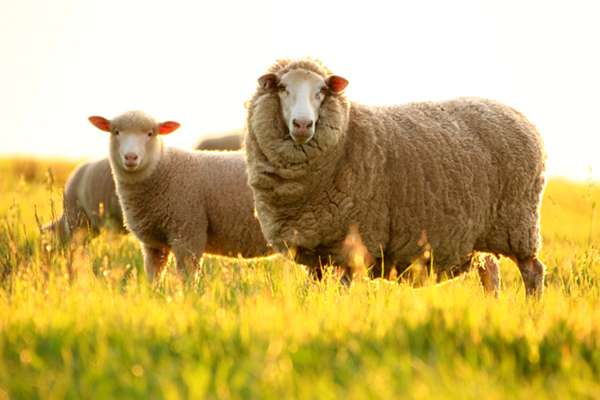
Barber’s pole continues to be problematic as it has demonstrated an ability to rapidly develop resistance to chemical treatments, due to its short lifecycle and high production of eggs under the right conditions.
Barber’s pole is a blood-feeding worm that matures in the abomasum and can have serious implications for sheep health, welfare and productivity. Signs of acute infections include anaemia, lethargy, collapse and death. Chronic signs may include significant reductions in wool growth, weight gains, milk production and bottle jaw (sub-mandibular oedema).
With the shortest lifecycle (20 days) of any gastrointestinal nematode and highly prolific female worms laying around 10,000 eggs per day under ideal conditions, worm numbers can build up quickly on pastures. As a result, disease outbreaks can occur rapidly and with little warning. Resistance to drenches can also develop within just a few years of a new active becoming available1.
Barber’s pole prefers warm and higher-rainfall climates, as these create an ideal environment for prolific reproduction and rapid build-up of worm numbers in sheep and on pastures. Its distribution appears to be extending2 and in unseasonably wet, warm summers, barber’s pole can appear in localised pockets in any state.
Summer and autumn are the greatest risk periods for sheep health. However, eggs deposited in late summer and autumn may develop into infective larvae that persist through winter into spring.
Best practice monitoring requires a WormTest3, also known as a worm egg count (WEC) test, of a mob. Test every 4 to 6 weeks during the barber’s pole worm season or after a combination of high temperatures and rainfall. Ideally, larval differentiation should be conducted to confirm that barber’s pole worms are present. WormTest results will help to identify the ideal drenching time. Thresholds for treatment vary across Australia, but Wormboss3 can provide specific guidance for your region.
Drench resistance is common in barber’s pole worms in sheep, but the pattern and degree of resistance varies by region and even by farm. It is important to understand the resistance profile of your farm by conducting regular DrenchChecks3 (WormTest up to 10 days before and at 14 days after drenching) to assess drench effectiveness and by conducting a full DrenchTest3 (examines each drench’s effectiveness for each worm type present and is the most accurate way to test for drench resistance) every 2 to 3 years to identify the most effective actives to use.
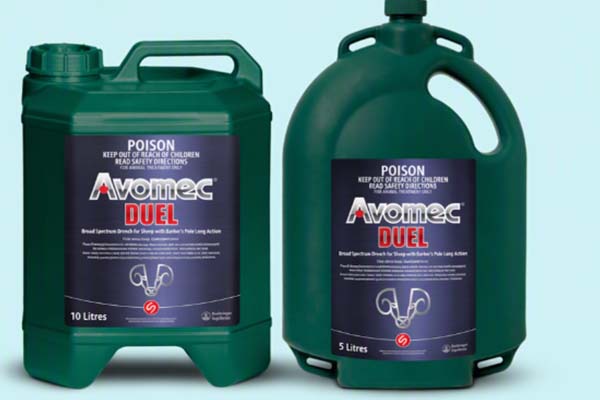
All drench treatments should be conducted using products to which the specific worm population is susceptible, based on the testing described above. A range of narrow, medium and broad-spectrum products are available. Closantel-based products like AVOMEC® Duel, which have sustained activity against barber’s pole worm, offer a good treatment option, particularly when the barber’s pole worm challenge is severe. See the product label for full claim details and directions for use.
Management of barber’s pole worm is challenging, however, with the right monitoring, testing and treatment plan the impact on your mob can be minimised.
References:
This article was written by Boehringer Ingelheim for Seasons magazine.
Disclaimer - important, please read:
Elders provides recommendations to the best of its knowledge and based on assumptions and information which it understands to be up to date, complete and accurate. If you are aware of any error or inaccuracy with the information on which this recommendation is based, you must immediately bring this to Elders’ attention. This recommendation is provided for your use only, and not that of any other third party. In some circumstances, the information Elders provided may be in summary form or derived from information sourced from third parties, however, Elders has not independently verified the information and cannot guarantee its accuracy.
You should always carefully evaluate all available information and consult Elders or another advisor further before you commit to any course of action or rely on any recommendation. Additionally, Elders expects that you will use your knowledge, experience and best judgement in relying on any recommendation and determining whether the recommendation is, and continues to be, appropriate. Elders do not accept liability or responsibility for any indirect, consequential or economic loss or damage of any kind arising from your acceptance or reliance on this recommendation. To the fullest extent permitted by law, all guarantees, warranties or implied terms and conditions are expressly excluded and Elders’ liability with respect to any services provided is limited to re-supply of the services, or the cost of having the services re-supplied. Elders may from time to time recommend products or services for which it may receive a financial incentive (rebate, commission, benefit, etc) from a supplier/manufacturer directly related to your purchase or use of that product or service.