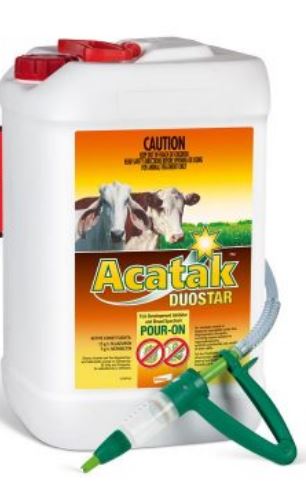
The strategic application of a long-acting chemical treatment at the start of the cattle tick (Rhipicephalus microplus) season plays a critical role in minimising tick populations on pastures and cattle.
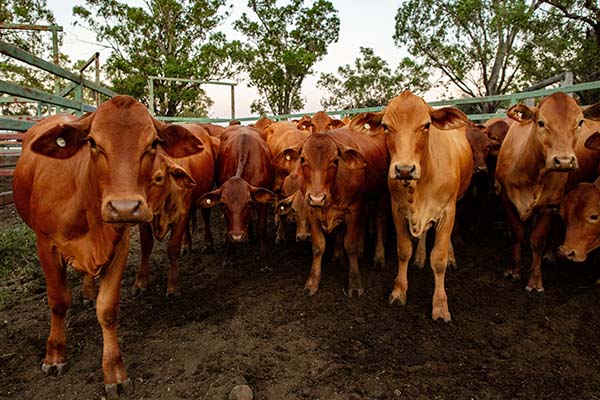
Elanco technical consultant, Craig Stevenson, says the objective of any strategic tick control programs should be to contain the population early in the season before it becomes established and then to keep it at a manageable level.
Otherwise, left untreated, cattle tick populations can increase rapidly and become costly.
“Regardless of the Bos indicus content of cattle, chemical treatment remains an important part of strategic programs to control cattle ticks,” Craig says.
“In Northern NSW, Southern Queensland and Central Queensland, the first treatment should be applied in spring before the start of the ‘spring rise’.”
“In Northern Queensland, Northern Territory and Northern Western Australia, the first treatment is typically applied in late summer or early autumn.”
“Acatak Duostar is ideal as the first chemical treatment because it has two modes of action that provide rapid knockdown and long-lasting residual control of susceptible cattle ticks for up to 84 days.”1
“Its other major advantage is that it protects the entire herd, including bulls, cows, weaners and calves suckling treated cows, against ticks.”
“In combination, these two benefits mean Acatak Duostar helps to prevent the build-up of tick populations on cattle and pastures when applied early in the season.”
Craig says Acatak Duostar should always be used in rotation with other chemistry with different modes of action known to be effective against local tick populations.
“Our recommendation is to strike first with Acatak Duostar and then use an isoxazoline pour-on or long-acting injectable ‘mectin’ to keep the tick population suppressed,” he says.
“This helps to minimise the development of resistance and achieve season-long protection against cattle tick.”
Acatak Duostar contains two modes of action (15 g/L fluazuron and 5 g/L ivermectin) that work in combination to break the life cycle of cattle ticks.
“Ivermectin is a member of the macrocyclic lactone family and provides rapid knockdown control and short-term residual activity against all stages of cattle tick,” Craig says.
“It also offers the convenience of providing broad spectrum control of other economically important parasites, such as roundworms, lungworm, sucking and biting lice, mites and buffalo flies.”
“Fluazuron is a powerful insect growth regulator that provides long-term protection from ticks picked up from infested pastures.”
“Fluazuron breaks the lifecycle of cattle ticks by interrupting the moulting process of tick larvae and nymphs and inhibits egg-laying and hatching.”
Both active ingredients are absorbed dermally and orally via grooming.
“Once absorbed, fluazuron levels within treated animals remain in equilibrium between blood and subcutaneous body fat,” Craig says.
“This reservoir means passive protection will be transferred from treated cows to suckling calves via milk.”
“However, it will reduce the level of fluazuron in treated cow and therefore reduce the length of the protection period in cows to 6 to 8 weeks.”
“Similarly, fluazuron levels in rapidly growing cattle will be diluted via the development of more fat and muscle tissue when compared to cattle with low or medium weight gains.”
Importantly, an integrated approach is required for effective control of cattle ticks and the prevention of tick fever.
“This not only includes chemical treatment, but also vaccination, breeding tick-resistant cattle and pasture management”, Craig explains.
“With cattle tick recognised as one of the most economically significant parasites in the Australian beef industry2, we can’t afford to ignore its risk.”
Infestations can cause significant economic losses arising from tick worry, tick fever, anaemia, weakness, reduced appetite, weight loss, reduced fertility and death.
Research has shown just one tick can reduce weight gain by 1 g/head/day or milk production by 8.9 mL/head/day.3
Assuming an ‘average’ burden of 50 ticks per head, that equates to 1.5 kg of lost liveweight gain or 13.4 litres of lost milk production every 30 days.
Remember: always read and follow label directions. Good agricultural practice is essential for optimal tick control.
Acatak, Duostar, Elanco and the diagonal bar logo are trademarks of Elanco or its affiliates. ©2026 Elanco or its affiliates. EAH26220 PM-AU-26-0555.
References: 1. Bull, M.S. et al. (1996). Suppression of Boophilus microplus populations with fluazuron - an acarine growth regulator. Aust. Vet. J. 74(6):468-470.
2. Shephard, R. et al. (2022). Priority list of endemic diseases for the red meat industry – 2022 Update. Meat & Livestock Australia. Report B.AHE.0327.
3. Jonsson, N. et al. (1998). Production effects of cattle tick (Boophilus microplus) infestation of high yielding dairy cows. Vet. Parasitol. 78: 65–77.
This article was written by Craig Stevenson – Elanco Technical Consultant, Farm Animal, for Seasons.
Disclaimer - important, please read:
Elders provides recommendations to the best of its knowledge and based on assumptions and information which it understands to be up to date, complete and accurate. If you are aware of any error or inaccuracy with the information on which this recommendation is based, you must immediately bring this to Elders’ attention. This recommendation is provided for your use only, and not that of any other third party. In some circumstances, the information Elders provided may be in summary form or derived from information sourced from third parties, however, Elders has not independently verified the information and cannot guarantee its accuracy.
You should always carefully evaluate all available information and consult Elders or another advisor further before you commit to any course of action or rely on any recommendation. Additionally, Elders expects that you will use your knowledge, experience and best judgement in relying on any recommendation and determining whether the recommendation is, and continues to be, appropriate. Elders do not accept liability or responsibility for any indirect, consequential or economic loss or damage of any kind arising from your acceptance or reliance on this recommendation. To the fullest extent permitted by law, all guarantees, warranties or implied terms and conditions are expressly excluded and Elders’ liability with respect to any services provided is limited to re-supply of the services, or the cost of having the services re-supplied. Elders may from time to time recommend products or services for which it may receive a financial incentive (rebate, commission, benefit, etc) from a supplier/manufacturer directly related to your purchase or use of that product or service.