
When Tom Penna started his career with Elders in 1974, the Australian livestock industry looked very different. Computers didn't exist in sale yards, livestock was sold through large central markets, and everything was recorded by hand. After 50 years with Elders, Tom is preparing for retirement with a wealth of stories that span some of the biggest changes Australian agriculture has ever seen.
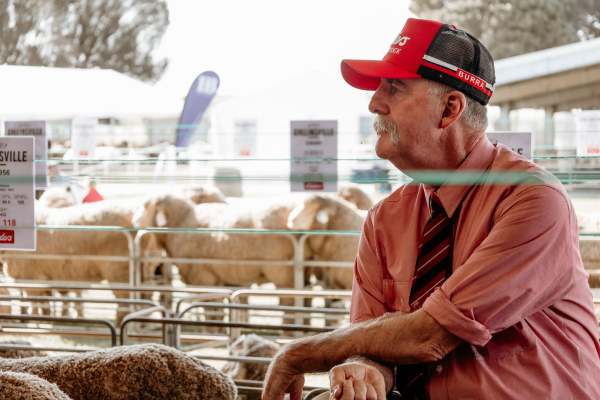
Long before Tom began his career with Elders, the company was already part of his family story.
“My mum had two brothers that were lifelong Elders men,” Tom shared.
“One of them was a returned soldier from World War II, and later he became the manager overseeing all of Elders' properties.”
Tom's own journey began at the former Gepps Cross livestock markets, north of Adelaide. At the time, it was one of South Australia's major livestock selling centres, handling enormous numbers of sheep, cattle and pigs each week.
“I started as a junior clerk at the livestock markets. On my 18th birthday there were 70,000 sheep and lambs sold through the yards,” Tom recalled.
The scale of those operations is difficult to imagine today. There were no computers, electronic records or online selling platforms. Everything was handwritten and calculated manually.
“It was all pen and paper and adding machines. Looking back now, it's amazing what we managed to process.”
From those early days in the yards, Tom moved through numerous Elders branches across South Australia, where he saw the realities of agriculture in all seasons. At Wudinna, during a severe drought, he remembers one farmer being unable to sell an entire pen of sheep for 20 cents because there were no feed and no water.
Around the same time, another challenge emerged when the cattle market collapsed when export demand disappeared.
“A beast worth $300 one week was worth $30 the next week. It crashed overnight,” Tom said.
Many producers across Eyre Peninsula, Yorke Peninsula and the Mallee had expanded their cattle enterprises during the boom. When the market turned, they were left holding stock with few selling options.
“All of a sudden everybody had cattle and nobody could sell them. It took years to work through it.”
One of the most difficult periods came during the flock reduction scheme of the early 1990s, when Australia's sheep population had reached around 180 million head and wool stockpiles had grown to unsustainable levels.
“There was a scheme where farmers received two dollars a head to reduce numbers,” Tom said.
“It was gut-wrenching. We'd be counting sheep to verify the numbers. The most I counted in one pit was 800.”
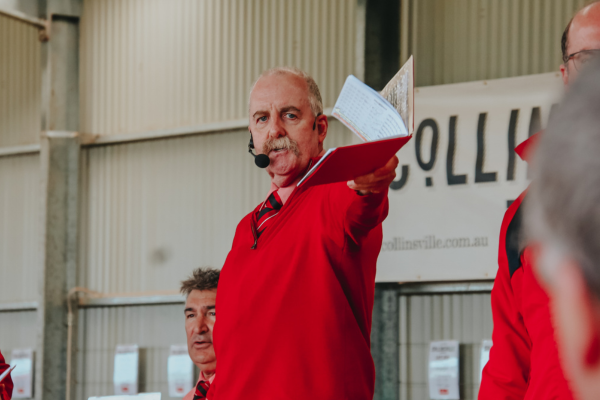 Tom Penna auctioneering at the Collinsville Ram sale 2022
Experiences like those taught Tom one lesson early: agriculture moves in cycles. He saw markets rise and fall, producers endure difficult seasons, and communities continue to find a way forward. Those lessons have stayed with him throughout his career and became part of the practical wisdom he shared with colleagues, clients and younger agents.
While Tom's career included roles in branch management and real estate, as well as a period with the Stock Journal, he became particularly well known for his work with stud stock. During the 1980s, he played a key role in one of the most exciting periods in the history of the Australian Merino industry, facilitating sales that attracted worldwide attention.
During this time, Tom broke the world record price for a Merino ram three times. “First, it was $102,000. Then $165,000. Then $215,000.”
International demand for Australian genetics was driving unprecedented interest in the industry. Buyers travelled from all over the world to gain access to Australian bloodlines, and Tom experienced that demand first-hand.
“The appetite from overseas buyers was extraordinary. We had Russian and Chinese buyers travelling around South Australia buying huge numbers of rams,” he said.
“At some sales they were purchasing the majority of the catalogue. They were blowing everyone away.”
One of Tom's strongest memories from that time was showing a group of Argentinian visitors around South Australia's Mid North to look at rams before the Adelaide Ram Sale.
“They saw one particular ram and then came to the Adelaide Ram Sale.”
When the bidding began, the competition came down to South America versus North America.
“The Argentinians ended up beating a buyer from the United States.”
The sale reflected the extraordinary reputation Australian Merino genetics had earned around the world. Tom was at the heart of that growth, helping connect producers with international buyers and witnessing first-hand the global demand for quality Australian livestock.
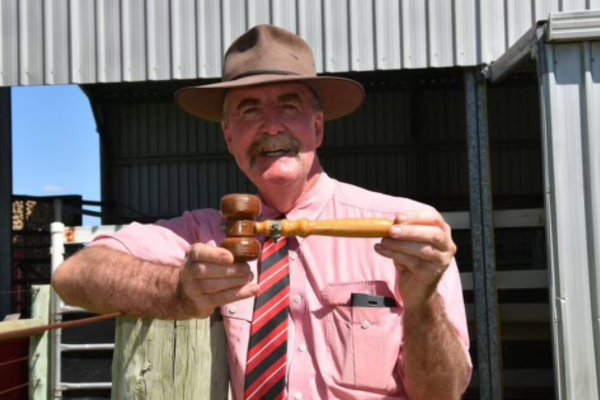
Yet, despite the record prices and industry milestones, Tom's contribution has never been measured solely by results in the sale ring. Across five decades with Elders, he has built a reputation based on relationships, trust and consistency.
Producers trusted him with their livestock. Colleagues became lifelong friends. Younger agents and auctioneers sought his guidance. He stayed alongside with generations of clients through good seasons and difficult ones.
When asked what advice he would give young livestock agents entering the industry today, Tom's answer is simple.
“Play with a straight bat.”
For Tom, success in livestock agency has always depended on being honest, transparent and reliable.
“If you do not know the answer, you find out. If you say you will get back to someone, you do it.”
As he retires from his full-time role, Tom will not be stepping away completely. He plans to remain involved with several ram sales each year, assist with buying orders and contribute to stud stock reviews.
Outside the industry, he is looking forward to spending more time with family, travelling, playing the ukulele and with his Labrador, who ensures he stays active with twice-daily walks.
“It'll be grandparent duties, a bit of travelling and just messing around.”
After 50 years of service, Tom leaves behind a legacy defined not only by longevity, but by the way he carried himself throughout his career. He represented Elders with professionalism, humility and honesty, and he earned the respect of clients and colleagues across the industry.
On behalf of everyone at Elders, thank you, Tom, for your loyalty, your knowledge, your stories and your contribution to Australian agriculture. Your career has been part of Elders’ story, and your influence will continue through the people you have worked with, mentored and supported along the way.