
Recent premium fungicide trials by Laconik offer valuable insights for Western Australian canola growers looking to maximise crop performance and profitability.
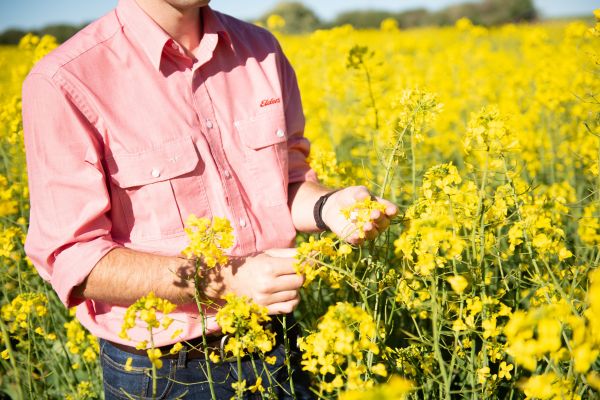
Conducted across five sites in WA’s high rainfall zones, including Kojonup, Dandaragan, and Bremer Bay, the large-scale, farm-based trials compared the performance of three premium fungicides: Aviator® Xpro®, Miravis® Star, and Revystar®, against untreated crops. The findings indicate that under the right conditions, premium fungicides can deliver meaningful yield improvements and strong economic returns, reinforcing their role as an important tool in crop protection.
Key takeaways
The Kojonup and Dandaragan sites saw the most consistent gains, with all three premium fungicides lifting yields compared to untreated crops.
There were reliable yield improvements across five of the sites. Aviator® Xpro® increased yield by 0.16 t/ha, and Miravis® Star and Revystar® each added 0.18 t/ha.
While some sites, like Condingup, saw little benefit, highlighting that low-disease environments may not justify the cost; the trials show that premium fungicides can deliver big rewards under the right conditions.
Why it matters
These results highlight that high value fungicides can be a powerful tool in the right paddock, offering the potential for real gains in both yield and profitability when disease risk is high. They also underscore the importance of using farm-specific knowledge to guide input decisions.
Craig White, Advisory Services Manager WA at Elders, emphasised the importance of understanding how products perform on your own farm.
“Focusing solely on the price of a product can lead to missed opportunities for potential higher returns on investment,” Craig said.
Often, the financial returns derived from using ‘more expensive’ products is overlooked and the value is not immediately apparent.
“Laconik trials can help uncover the true value of these products on your farm.”
Speak to your local Elders agronomist to explore what Laconik’s research findings and on-farm trials could mean for your cropping program.
Disclaimer – Important, please read:
The information contained in this article is given for general information purposes only, current at the time of first publication, and does not constitute professional advice. The article has been independently created by a human author using some degree of creativity through consultation with various third-party sources. Third party information has been sourced from means which Elders consider to be reliable. However, Elders has not independently verified the information and cannot guarantee its accuracy. Links or references to third party sources are provided for convenience only and do not constitute endorsement of material by third parties or any associated product or service offering. While Elders has exercised reasonable care, skill and diligence in
preparation of this article, many factors including environmental/seasonal factors and market conditions can impact its accuracy and currency. The information should not be relied upon under any circumstances and, to the extent permitted by law, Elders disclaim liability for any loss or damage arising out of any reliance upon the information contained in this article. If you would like to speak to someone for tailored advice specific to your circumstances relating to any of the matters referred to in this article, please contact Elders.