The recent rains across Australia, combined with increasing spring temperatures, are expected to result in increased worm burdens in the coming months. Worms can have a significant impact on the growth performance of weaners, leading to increased risk of mortality, longer time to market, reduced fertility at joining and reduced wool growth.
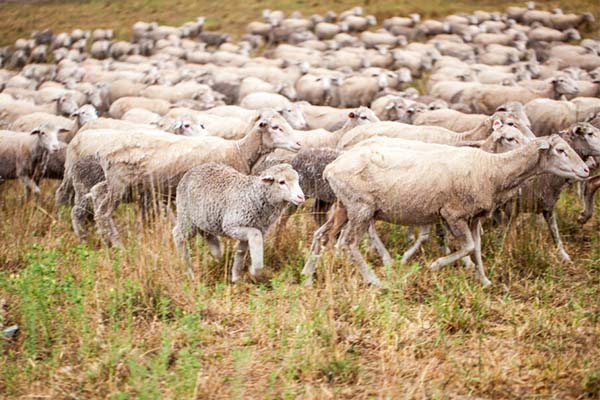
Weaning is a stressful period for lambs, being taken away from the ewe, switching to a complete pasture diet and establishing a new social hierarchy. A worm burden at this time further reduces feed intake, causes damage to the intestinal lining and diverts precious energy needed to develop an immune response to worms rather than growing meat or wool.
Now is the time to review your plan to minimise losses caused by worms and maximise herd productivity. A weaner worm management plan should at least consider the following elements:
Weaners should be moved to a prepared paddock with high quality pasture, access to good quality water and most importantly, a low worm burden. Preparation of a low worm-risk paddock should commence at least six-months before it is needed, with the aim of minimising contamination with worm eggs during that time. Strategies include grazing with cattle or wethers for six-months, utilising intensive grazing techniques (with high stocking densities immediately after effective drenching, for no more than 30 days) or spelling the paddock for six-months prior to use. Select a strategy that best suits your farming operation.
To ensure survival and reproductive success, weaners should have a defined feeding strategy and be trained to eat supplementary feed while still with the ewes. This is to ensure they meet specific growth targets. Growth targets will vary across farms depending on pasture, genetics and markets, but there are a few basic principles that are worth knowing. Weaner bodyweights and growth rates are highly correlated to survival rates. Small increases in growth rates post-weaning will have big benefits in increased weaner survival. A simple way of expressing growth targets is that weaners need to reach 45 per cent (pc) of their mature weight1 before weaning, and/or pasture dry off, to reach industry standards of 95 pc survival. To monitor your weaners’ progress toward meeting those targets, weigh a random sample every 4 to 6 weeks.
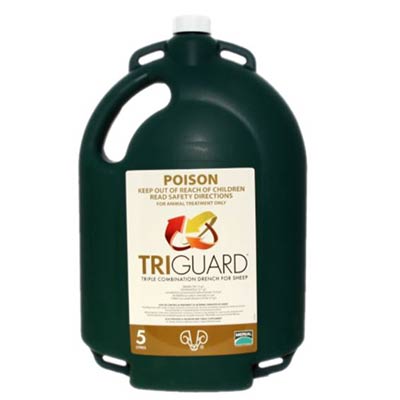
The weaning drench is one of the most important strategic drenches on the annual calendar. A strategic drench is a scheduled treatment aimed at reducing pasture contamination with worm larvae and is done irrespective of worm egg counts (WECs). The weaning drench should be administered no later than 14 weeks after the start of lambing and coincides with building worm infestations, high pasture intake, and physiological changes that increase production loss associated with worms. Using an effective drench in weaners is critical to clean out worm burdens and reduce contamination of your prepared paddock. Combination drenches containing actives from multiple drench classes are a good first choice as they are broad spectrum and have activity against worms that may have resistance to one of the actives. A triple combination such as TRIGUARD® is a good option for a short-acting drench in weaners. Following treatment, weaners should be monitored with WECs at 4 to 6 weekly intervals to determine the need for follow-up tactical drenching.
Start developing your weaner worm management plan today. If you require further assistance, contact your Elders livestock production specialist to discuss how you can manage worms in your area and get the best from your weaners.
This article was written by Dr Peter Bracken of Boehringer Ingelheim for Seasons.
References:
1. AWI and MLA. Making More From Sheep, Tool 11.5 Liveweight targets for weaners and young ewes. Accessed July 2025.
®TRIGUARD is a registered trademark of the Boehringer Ingelheim Group.
Disclaimer - important, please read:
Elders provides recommendations to the best of its knowledge and based on assumptions and information which it understands to be up to date, complete and accurate. If you are aware of any error or inaccuracy with the information on which this recommendation is based, you must immediately bring this to Elders’ attention. This recommendation is provided for your use only, and not that of any other third party. In some circumstances, the information Elders provided may be in summary form or derived from information sourced from third parties, however, Elders has not independently verified the information and cannot guarantee its accuracy.
You should always carefully evaluate all available information and consult Elders or another advisor further before you commit to any course of action or rely on any recommendation. Additionally, Elders expects that you will use your knowledge, experience and best judgement in relying on any recommendation and determining whether the recommendation is, and continues to be, appropriate. Elders do not accept liability or responsibility for any indirect, consequential or economic loss or damage of any kind arising from your acceptance or reliance on this recommendation. To the fullest extent permitted by law, all guarantees, warranties or implied terms and conditions are expressly excluded and Elders’ liability with respect to any services provided is limited to re-supply of the services, or the cost of having the services re-supplied. Elders may from time to time recommend products or services for which it may receive a financial incentive (rebate, commission, benefit, etc) from a supplier/manufacturer directly related to your purchase or use of that product or service.