
Across Australia, farmers live with a threat that doesn’t clock off at dusk or respect property boundaries. Whether you call them dingoes or wild dogs, one fact remains: they are tearing through flocks and livelihoods from Broome to Brisbane and beyond.
The feelings across rural communities is the same. Producers aren't anti-wildlife. They’re not looking to eradicate a species for convenience. But the idea that wild dogs, responsible for savage livestock losses, could be reclassified for greater protection is understandably triggering alarm bells.
Gallagher, works shoulder-to-shoulder with farmers, hearing their stories every day: ewes mauled mid-lambing, mobs scattered and never fully recovering, producers rising every morning with a knot in their stomachs, hoping their animals (and bottom line) are safe. In the Southern Tablelands, some graziers have stopped running sheep entirely, unable to sustain the mental and financial toll of predation. The numbers back them up.
It’s estimated wild dogs cost Australian agriculture more than $89 million annually.
This figure doesn't include the psychological strain or lost productivity caused by chronic stress. And it’s not just isolated to the bush. In peri-urban zones, we’re seeing wild dog incursions too close to homes, roads, and infrastructure.
This is not just an environmental debate. It’s a question of how much we value rural resilience and the people who feed this country. If land management rules become more restrictive, producers may be left even more exposed.
While the threat of predation is an ongoing battle, there are solutions.
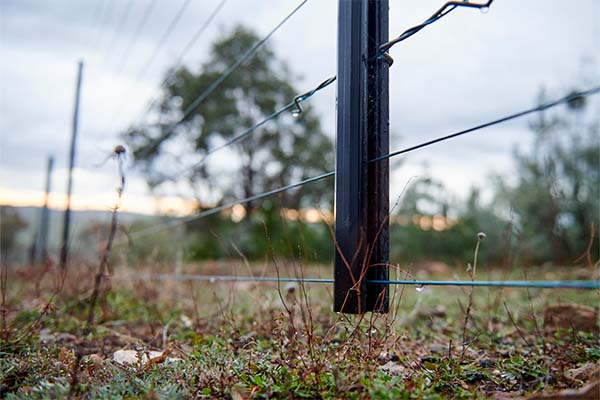
Strategic fencing programs have shown clear, measurable benefits. These initiatives need to be expanded.
An independent study has found that farmers who installed exclusion fencing experienced dramatic on-farm improvements:
The total economic benefit, including higher weaning rates, improved wool quality, and reduced predator losses, was estimated at $29 per Dry Sheep Equivalent (DSE), highlighting the strong financial gains from strategic fencing. Additionally, available pasture biomass improved by 20 per cent over the study period, reinforcing exclusion fencing as a powerful tool for boosting both productivity and sustainability.
Gallagher has played a key role in supporting exclusion fencing efforts with innovative fencing systems designed specifically for high-pressure environments. The company has been offering electric fence energiser technology for over 87 years, and suspension fence solutions for over fifty years. The combination of adding power to any fence but particularly a suspension fence are the two essential ingredients for protecting domestic livestock and changing the behaviour of invasive animals cost effectively.
A mains or solar powered energiser in a permanent suspension fence offers a cost-effective, durable, and low-maintenance solution ideally suited for large-scale properties. Importantly, it is designed to flex on impact — reducing breakages from animal or weather pressure — while still maintaining its integrity as a physical and psychological barrier to wild dogs. When paired with effective electric energisers and remote monitoring tools, the Gallagher Suspension fence system becomes a critical part of a layered defence strategy that keeps livestock safe, reduces losses, and gives farmers peace of mind. It’s an investment in both productivity and mental wellbeing.
Gallagher has always stood behind rural producers, offering the solutions that help them stay one step ahead.
The truth is, this debate isn’t about conservation versus control. It’s about balance. Let’s ensure we’re making decisions that reflect the realities of the land and the people who live on it.
This article was written by Gallagher for Seasons magazine.
Disclaimer - important, please read:
Elders provides recommendations to the best of its knowledge and based on assumptions and information which it understands to be up to date, complete and accurate. If you are aware of any error or inaccuracy with the information on which this recommendation is based, you must immediately bring this to Elders’ attention. This recommendation is provided for your use only, and not that of any other third party. In some circumstances, the information Elders provided may be in summary form or derived from information sourced from third parties, however, Elders has not independently verified the information and cannot guarantee its accuracy.
You should always carefully evaluate all available information and consult Elders or another advisor further before you commit to any course of action or rely on any recommendation. Additionally, Elders expects that you will use your knowledge, experience and best judgement in relying on any recommendation and determining whether the recommendation is, and continues to be, appropriate. Elders do not accept liability or responsibility for any indirect, consequential or economic loss or damage of any kind arising from your acceptance or reliance on this recommendation. To the fullest extent permitted by law, all guarantees, warranties or implied terms and conditions are expressly excluded and Elders’ liability with respect to any services provided is limited to re-supply of the services, or the cost of having the services re-supplied. Elders may from time to time recommend products or services for which it may receive a financial incentive (rebate, commission, benefit, etc) from a supplier/manufacturer directly related to your purchase or use of that product or service.