Independent analyst Simon Quilty from Global AgriTrends discusses why recent price rises signal the start of a structural shift in cattle markets, rather than a short-term response to rainfall.
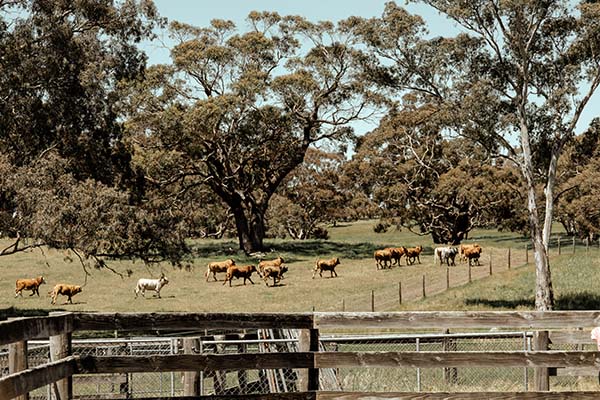
The recent rises in livestock prices across sheep and cattle may be attributed to the recent rainfall across Australia’s eastern seaboard. In part that is true, particularly in northern New South Wales (NSW) and southeast Queensland (Qld). But the combination of upcoming tightness and strong global demand is likely to underpin prices moving forward.
Australia’s liquidation of cattle in southern Australia has been unprecedented as highlighted in the most recent Australian Bureau of Statistics (ABS) release. With the female kill ratio at 65.1 per cent (pc) of the total southern kill, putting this as the sixth quarter of elevated kills, well above the breakeven 56.7 pc. Given the offloading in the market over the last eight weeks in the New England and south-eastern Queensland regions, we know it will likely see an elevated Q2 female kill as well.
This points to a tipping point in Australia’s southern kill, with Q3 likely to see a significant fall in kills and an increase in cattle prices, particularly for cows. If history is a guide, the rebuilds in both 2009 and 2016 also commenced in the September quarter. During this the female kill ratio fell by 6 pc, and cow prices rose by 15 pc over that three-month window. I can see a similar scenario playing out in Q3 this year.
Queensland cattle numbers are good, but not exceptional in many areas, particularly after the recent south-east Queensland tip-out. I believe they, too, will move into a mild rebuild in Q3, compared to an aggressive rebuild in southern Australia.
Once again, it’s a combination of higher cattle prices and good growing conditions that drives a herd rebuild. You need both, just one of these drivers on their own is not enough.
The other key trend highlighted by the most recent ABS data is the larger cattle kill capacity in southern Australia, which is now 14 pc higher than in northern Australia. This points to stronger southern prices, but also to the ongoing presence of southern buyers in northern Australia for the balance of this year, as they look to ‘fill the shackles’ of southern meatworks.
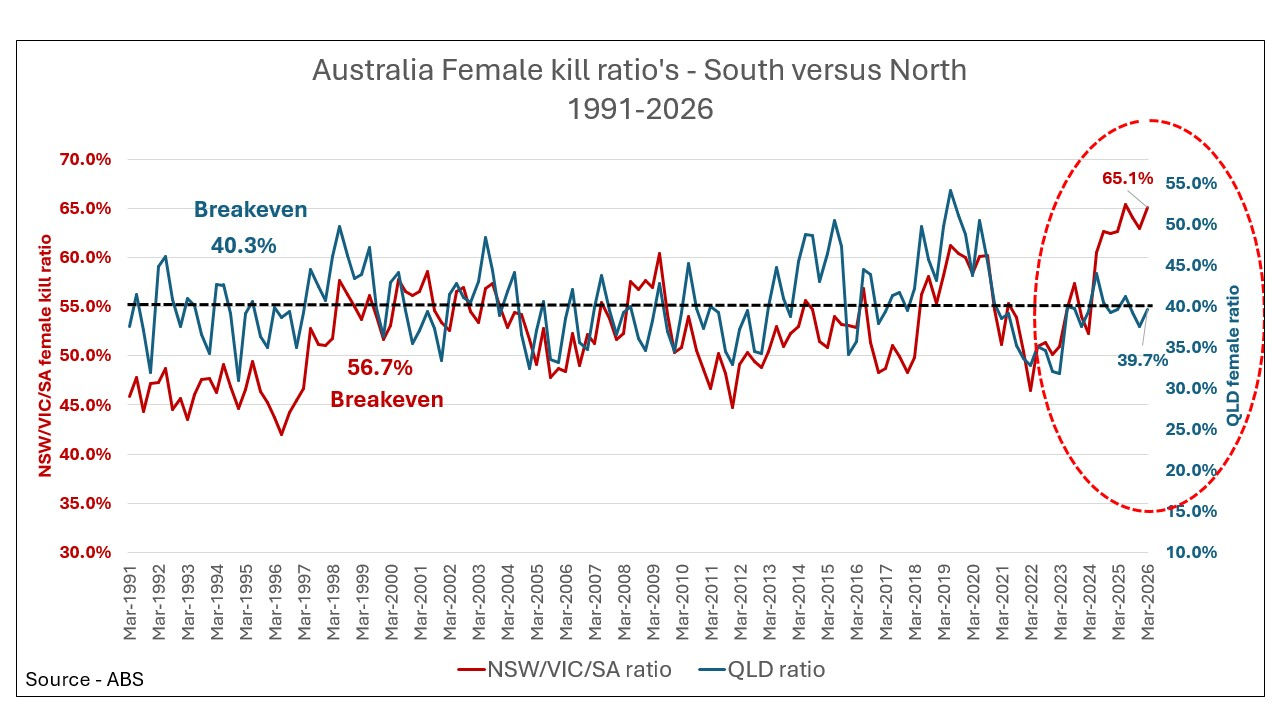 This chart shows northern Australian female kill ratios compared to southern, for the period 1991 to 2016. Source ABS, Global AgriTrends.
This tipping point will likely lead to elevated cattle prices over the next few years as Australia’s herd rebuild gets underway. The following cow price estimates for the next three years highlight how tightening cattle supplies will push prices higher.
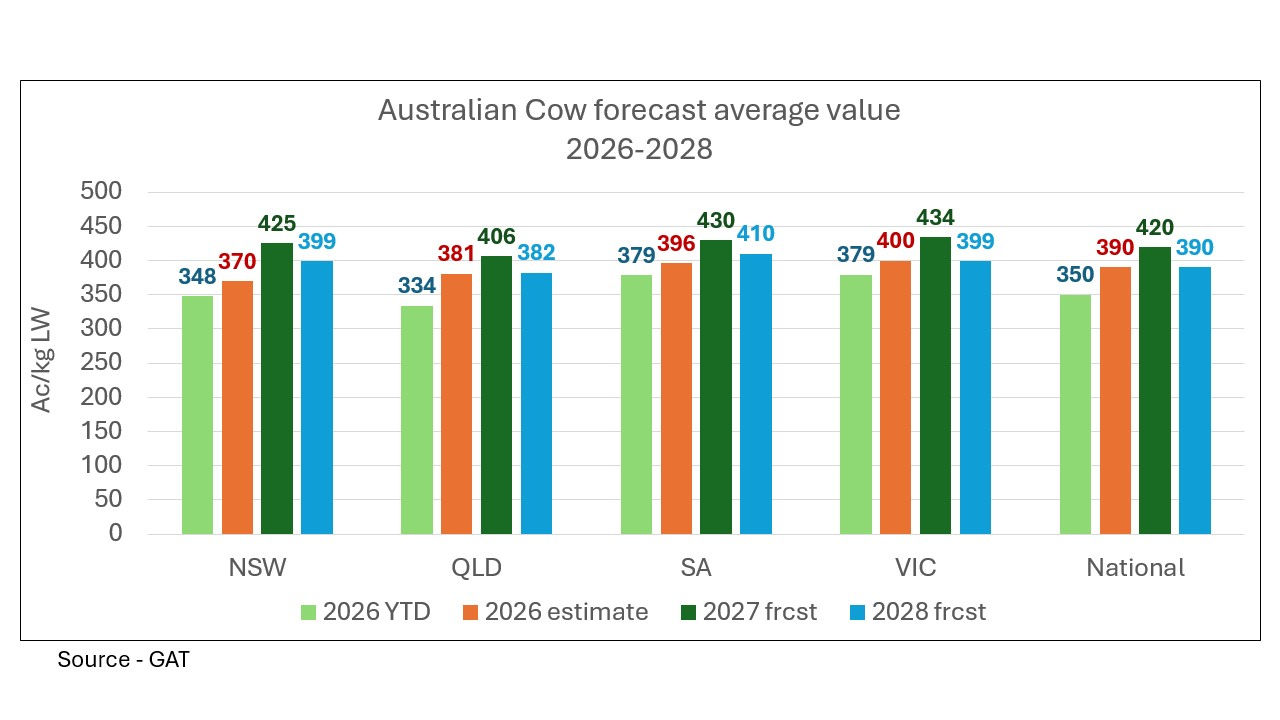 This chart shows the cow forecast value for 2026 through to 2028. Source: GAT, Global AgriTrends.
It should be noted that this tightening of Australian cattle supply occurs with a backdrop of strong global demand that is likely to remain strong for at least another 18 months. This has been driven by the North America rebuild that is about to commence, which will see female retention in the USA and higher prices as their own supply tightens, yet another tipping point in global markets.
Disclaimer - important, please read:
Elders provides recommendations to the best of its knowledge and based on assumptions and information which it understands to be up to date, complete and accurate. If you are aware of any error or inaccuracy with the information on which this recommendation is based, you must immediately bring this to Elders’ attention. This recommendation is provided for your use only, and not that of any other third party. In some circumstances, the information Elders provided may be in summary form or derived from information sourced from third parties, however, Elders has not independently verified the information and cannot guarantee its accuracy.
You should always carefully evaluate all available information and consult Elders or another advisor further before you commit to any course of action or rely on any recommendation. Additionally, Elders expects that you will use your knowledge, experience and best judgement in relying on any recommendation and determining whether the recommendation is, and continues to be, appropriate. Elders do not accept liability or responsibility for any indirect, consequential or economic loss or damage of any kind arising from your acceptance or reliance on this recommendation. To the fullest extent permitted by law, all guarantees, warranties or implied terms and conditions are expressly excluded and Elders’ liability with respect to any services provided is limited to re-supply of the services, or the cost of having the services re-supplied. Elders may from time to time recommend products or services for which it may receive a financial incentive (rebate, commission, benefit, etc) from a supplier/manufacturer directly related to your purchase or use of that product or service.