Elders livestock production specialist Steph Warwick explores the dangers of bone chewing and botulism in Australian cattle and offers practical prevention strategies.
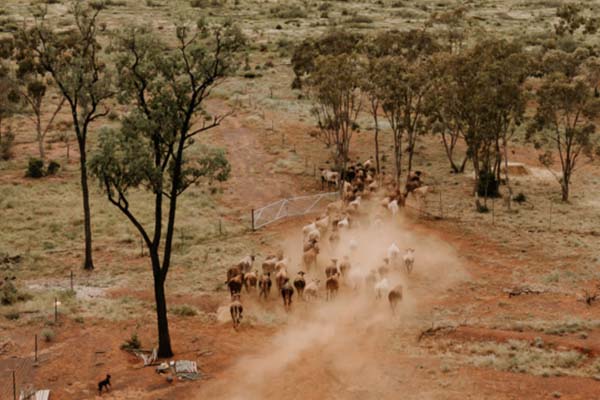
As the dry season approaches in the north, and the south continues to remain dry, it is timely to highlight not only phosphorus deficiency but its deadly associate, botulism.
As many will know, Australia’s ancient soils are notoriously low in phosphorus. Phosphorus deficiency is extremely common and well understood in the north, however it can also occur further south on unimproved land, with poor fertiliser history. Phosphorus levels in pastures decline as plants mature, therefore deficiencies are most noted in dry seasons. High Calcium supplementary feeds, such as cottonseed, can further exacerbate phosphorus deficiency, as calcium will bind to phosphorus rendering it unavailable to the animal.
Phosphorus deficiency is extremely production limiting. Common signs include lower appetite, poor growth rate, poor milk production, and poor fertility.
Perhaps the most classical sign, however, is ‘pica’, which is ‘the craving of non-food items’. In cattle this manifests as scavenging behaviour - eating soil and chewing on wood and bones. This is a dangerous habit, which greatly increases the risk of cattle catching another deadly disease, Botulism.
Botulism is a clostridial disease, caused by the bacteria clostridial botulinum. This bacteria breeds in rotting material, producing a toxin that results in muscle flaccidity and weakness. Even tiny amounts of this toxin can be fatal. Signs in affected cattle include a progressive muscle weakness, resulting in paralysis, difficulty swallowing and sudden death. Affected animals may stand at a water trough but be unable to physically drink. Another classical sign is tongue weakness, where the tongue can easily be pulled, and remain out, with the animal lacking the muscle strength to retract it.
Causes of botulism outbreaks can often be linked to a source of old bones, rotting carcasses, compost or chicken litter. If an animal carcase contaminates a supplementary feed source, such as silage, fed through an intensive feeding system, then outbreaks of affected animals can be large. There is no effective treatment. Mildly affected animals may recover with intensive, time-consuming supportive treatment, but mortality rates are high.
Vaccination against botulism is highly effective, and recommended in high-risk situations, with prevention being far cheaper than enduring stock losses.
Prevention tips:
Don’t hesitate to contact your local Elders livestock production specialist to discuss how this information relates to your own personal circumstances. We can help to review your supplementation or vaccination program, and arrange testing of pasture, soils or feed.
Disclaimer - important, please read:
Elders provides recommendations to the best of its knowledge and based on assumptions and information which it understands to be up to date, complete and accurate. If you are aware of any error or inaccuracy with the information on which this recommendation is based, you must immediately bring this to Elders’ attention. This recommendation is provided for your use only, and not that of any other third party. In some circumstances, the information Elders provided may be in summary form or derived from information sourced from third parties, however, Elders has not independently verified the information and cannot guarantee its accuracy.
You should always carefully evaluate all available information and consult Elders or another advisor further before you commit to any course of action or rely on any recommendation. Additionally, Elders expects that you will use your knowledge, experience and best judgement in relying on any recommendation and determining whether the recommendation is, and continues to be, appropriate. Elders do not accept liability or responsibility for any indirect, consequential or economic loss or damage of any kind arising from your acceptance or reliance on this recommendation. To the fullest extent permitted by law, all guarantees, warranties or implied terms and conditions are expressly excluded and Elders’ liability with respect to any services provided is limited to re-supply of the services, or the cost of having the services re-supplied. Elders may from time to time recommend products or services for which it may receive a financial incentive (rebate, commission, benefit, etc) from a supplier/manufacturer directly related to your purchase or use of that product or service.