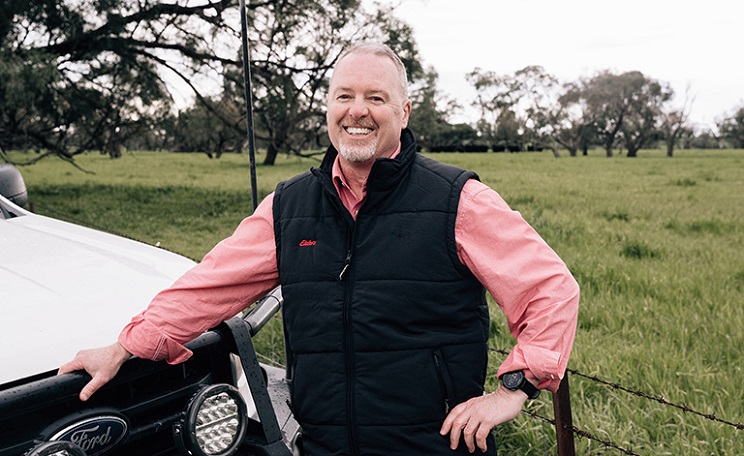
Elders Livestock Production Advisor Mark Dearing provides his advice on troubleshooting livestock production issues in summer.
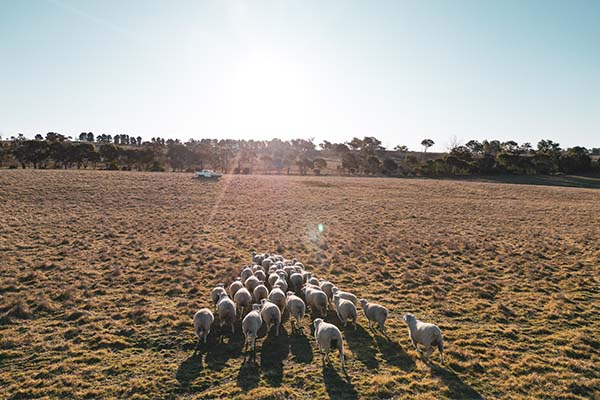
Across southern Australia, feedlots are currently seeing an increase in early health setbacks in newly arrived sheep and lambs, particularly respiratory disease and salmonella infections. These issues are most evident during the first week after induction, a period that is well recognised as one of the highest-risk stages in the feedlot production cycle.
In many cases, these diseases are not picked up in the feedlot itself.
It is highly likely that underlying infections are already present at low or subclinical levels before weaning and transport.
Lambs may appear healthy in the paddock, yet still be carrying respiratory pathogens or salmonella organisms. The stress associated with weaning, yarding, transport, dietary change, extreme weather conditions and adaptation to a new social and feeding environment can significantly suppress natural immune function. This temporary drop in disease resistance creates an opportunity for these existing infections to multiply rapidly and become clinical, sometimes with severe or fatal outcomes.
Early signs of respiratory disease can be subtle, including:
They can then progress to obvious breathing difficulty, nasal discharge, and rapid condition loss. Similarly, salmonellosis can emerge when stress disrupts normal gut balance, allowing the bacteria to proliferate. Affected lambs may show depression, fever, diarrhoea (sometimes with blood or mucus), dehydration, and rapid deterioration if not treated promptly. The two diseases more often than not, go hand-in-hand.
These patterns highlight the importance of viewing feedlot induction not just as a nutrition and management transition, but as a major health challenge. Minimising stress before and during transport, ensuring lambs are well grown and in good nutritional status, maintaining good hygiene in yards and troughs, and close monitoring during the first 7 to 10 days on feed are all critical. Early detection and rapid treatment of sick animals can markedly reduce losses, but long-term improvement relies on understanding that the disease process often begins well before lambs ever reach the feedlot gate.
An Elders Livestock Production Specialist can assist with the long-term strategies to mitigate these issues, including advanced weaning programs, lifetime health and short-term stress management programs for transport and feedlot entry. In addition, technology in products to achieve this is developing every day and is available now for use as prescribed for your individual operation.
Disclaimer - important, please read:
Elders provides recommendations to the best of its knowledge and based on assumptions and information which it understands to be up to date, complete and accurate. If you are aware of any error or inaccuracy with the information on which this recommendation is based, you must immediately bring this to Elders’ attention. This recommendation is provided for your use only, and not that of any other third party. In some circumstances, the information Elders provided may be in summary form or derived from information sourced from third parties, however, Elders has not independently verified the information and cannot guarantee its accuracy.
You should always carefully evaluate all available information and consult Elders or another advisor further before you commit to any course of action or rely on any recommendation. Additionally, Elders expects that you will use your knowledge, experience and best judgement in relying on any recommendation and determining whether the recommendation is, and continues to be, appropriate. Elders do not accept liability or responsibility for any indirect, consequential or economic loss or damage of any kind arising from your acceptance or reliance on this recommendation. To the fullest extent permitted by law, all guarantees, warranties or implied terms and conditions are expressly excluded and Elders’ liability with respect to any services provided is limited to re-supply of the services, or the cost of having the services re-supplied. Elders may from time to time recommend products or services for which it may receive a financial incentive (rebate, commission, benefit, etc) from a supplier/manufacturer directly related to your purchase or use of that product or service.