
Elders St George livestock trainee Chloe Taylor explores the issue of phosphorous deficiency in cattle, emphasising that it may be a risk for southern producers too.
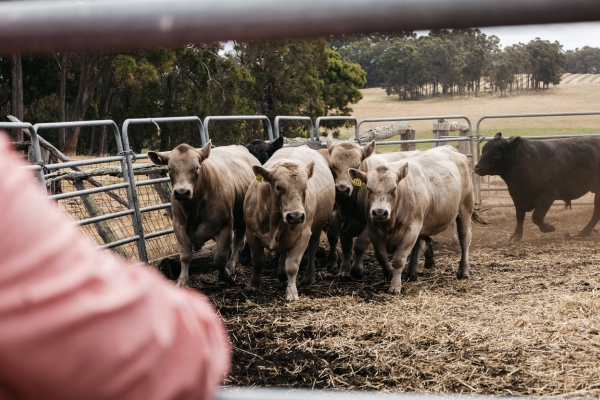
We are all familiar with the narrative of phosphorous deficiency, particularly within the northern regions of Australia. Despite this, deficiency also poses a threat to many regions of southern Australia as well.
Many pastures in the south have been revealed to be low in available phosphorous as a result of naturally low levels, in conjunction with a decline in fertiliser use in recent decades.
Phosphorus deficiency is a silent killer many are unaware of and presents severe limitations to production. It might be time to review the deficiency status of your area.
Phosphorous deficiency is capable of affecting all demographics of cattle and sheep and poses a threat to many of our primary industries as a result.
Phosphorus is the second most abundant mineral and supports processes such as bone formation and energy metabolism. Phosphorous is vital for growth and plays a role in skeletal development and maintaining bone density. Phosphorous deficiency represents significant costs to production through limitations on yield. To maximise production, all producers should be aware of their phosphorous deficiency status and implement supplement strategies to cater to this. It pays to be proactive in mitigating the signs of phosphorous deficiency.
Producers throughout Australia must be proactive in knowing their status regarding available soil phosphorous and should take the necessary steps to mitigate the signs of deficiency if present. Soil, pasture, and animal health are all potential indicators of potential phosphorous deficiency. Signs of acute deficiency in animals may include poor appetite, reduced growth, and reduced fertility. Managing phosphorous deficiency is also essential as a potential precursor to Botulism.
Fortunately, we are spoilt for choice with supplement options. Licks and loose licks are some of the most accessible options, and a resource which is readily available. Use within wet seasons is an ideal choice for supplementation, however many producers choose to supplement year-round.
If you are unsure of your status regarding phosphorous deficiency, there are measures which can be taken to provide a comprehensive understanding. Contacting your local department of agriculture or accessing resources like local phosphorous maps are ideal indicators to see if you may be at threat. MLA’s Phosphorous Hub is also a great source of information on manoeuvring deficiency, otherwise you can contact your local Elders livestock production specialist.
Disclaimer - important, please read:
Elders provides recommendations to the best of its knowledge and based on assumptions and information which it understands to be up to date, complete and accurate. If you are aware of any error or inaccuracy with the information on which this recommendation is based, you must immediately bring this to Elders’ attention. This recommendation is provided for your use only, and not that of any other third party. In some circumstances, the information Elders provided may be in summary form or derived from information sourced from third parties, however, Elders has not independently verified the information and cannot guarantee its accuracy.
You should always carefully evaluate all available information and consult Elders or another advisor further before you commit to any course of action or rely on any recommendation. Additionally, Elders expects that you will use your knowledge, experience and best judgement in relying on any recommendation and determining whether the recommendation is, and continues to be, appropriate. Elders do not accept liability or responsibility for any indirect, consequential or economic loss or damage of any kind arising from your acceptance or reliance on this recommendation. To the fullest extent permitted by law, all guarantees, warranties or implied terms and conditions are expressly excluded and Elders’ liability with respect to any services provided is limited to re-supply of the services, or the cost of having the services re-supplied. Elders may from time to time recommend products or services for which it may receive a financial incentive (rebate, commission, benefit, etc) from a supplier/manufacturer directly related to your purchase or use of that product or service.