Livestock producers across key areas are confronting a particularly tough season in 2025. Elders livestock production advisor David Trengove provides his advice on navigating the dry conditions.
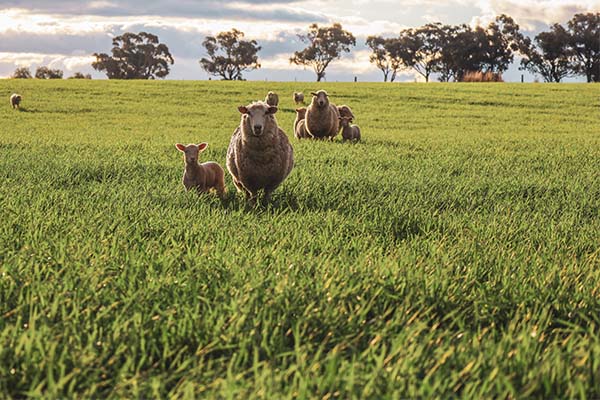
A combination of dry conditions, limited pasture growth, and fodder shortages has necessitated strategic management decisions to maintain herd health and productivity.
The autumn period was marked by below-average rainfall, leading to minimal pasture establishment and growth. This has resulted in a significant feed deficit as winter progresses. Compounding the issue, southern NSW, which is traditionally a source of supplementary fodder, has also experienced poor seasonal conditions. This has lead to reduced hay and silage availability. Producers are facing increased competition and higher prices for limited feed resources.
The feed scarcity has prompted many producers to implement early weaning strategies to alleviate nutritional demands on breeding stock. Confinement feeding has also become more prevalent, allowing for controlled feeding and pasture preservation. These measures require careful planning and resource allocation however, particularly given the limited availability of supplementary feeds.
Additionally, the dry conditions have hindered the establishment of winter forage crops, further limiting feed options. Producers are exploring alternative feed sources and adjusting rations to meet livestock nutritional requirements.
Recent severe frost events have posed additional challenges, particularly for newborn lambs and calves. These conditions have necessitated increased vigilance and proactive management to safeguard livestock during critical periods.
In response to these challenges, producers are focusing on strategic planning and adaptive management practices. Key strategies include:
These measures, while resource-intensive, are critical for maintaining livestock health and preparing for future seasons.
While the seasonal outlook remains uncertain, the resilience and adaptability of producers across Central West NSW is evident. By employing strategic management practices and remaining responsive to changing conditions, producers can mitigate the impacts of adverse weather and maintain the health and productivity of their herds.
Disclaimer - important, please read:
Elders provides recommendations to the best of its knowledge and based on assumptions and information which it understands to be up to date, complete and accurate. If you are aware of any error or inaccuracy with the information on which this recommendation is based, you must immediately bring this to Elders’ attention. This recommendation is provided for your use only, and not that of any other third party. In some circumstances, the information Elders provided may be in summary form or derived from information sourced from third parties, however, Elders has not independently verified the information and cannot guarantee its accuracy.
You should always carefully evaluate all available information and consult Elders or another advisor further before you commit to any course of action or rely on any recommendation. Additionally, Elders expects that you will use your knowledge, experience and best judgement in relying on any recommendation and determining whether the recommendation is, and continues to be, appropriate. Elders do not accept liability or responsibility for any indirect, consequential or economic loss or damage of any kind arising from your acceptance or reliance on this recommendation. To the fullest extent permitted by law, all guarantees, warranties or implied terms and conditions are expressly excluded and Elders’ liability with respect to any services provided is limited to re-supply of the services, or the cost of having the services re-supplied. Elders may from time to time recommend products or services for which it may receive a financial incentive (rebate, commission, benefit, etc) from a supplier/manufacturer directly related to your purchase or use of that product or service.