Summer has arrived, and Elders Senior Livestock Production Specialist Rob Inglis has provided this handy guide to managing heat stress in sheep.
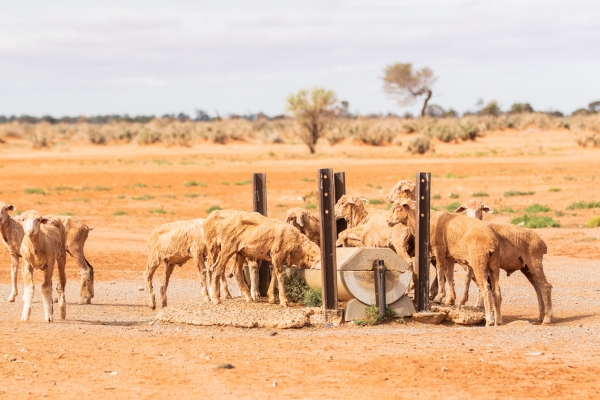
If the long-range forecast is to be believed, a large percentage of Australia’s sheep breeding areas will experience above average temperatures this summer. This could affect reproductive performance, particularly for those joining ewes between November and February.
The reproductive performance of the ewe is most affected by heat stress in the week prior to oestrus, during oestrus and then for the ensuing 5 days.
For rams, relatively short periods of high temperatures (1 to 4 days) can have a negative impact.
However, there is significant variation between rams and ewes in their response to heat stress.
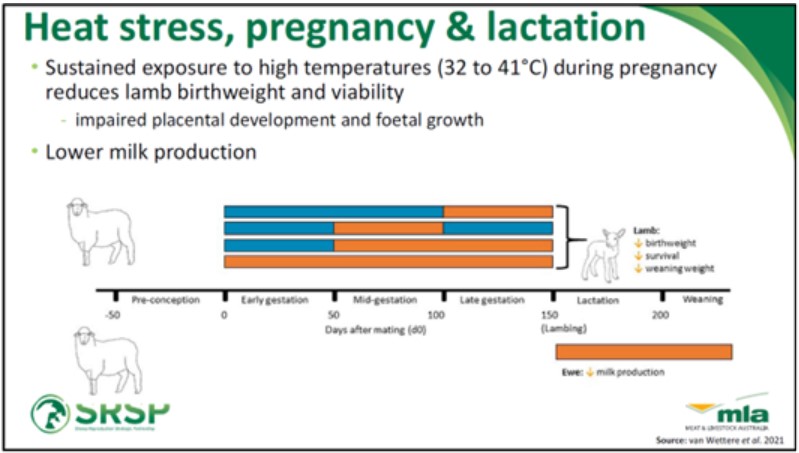 This graphic shows some of the impacts of sustained exposure to high temperatures for ewes. Source: The Sheep Reproductive Strategic Partnership – MLA.
Speak to an Elders Livestock Production Advisor for further information.
Disclaimer - important, please read:
Elders provides recommendations to the best of its knowledge and based on assumptions and information which it understands to be up to date, complete and accurate. If you are aware of any error or inaccuracy with the information on which this recommendation is based, you must immediately bring this to Elders’ attention. This recommendation is provided for your use only, and not that of any other third party. In some circumstances, the information Elders provided may be in summary form or derived from information sourced from third parties, however, Elders has not independently verified the information and cannot guarantee its accuracy.
You should always carefully evaluate all available information and consult Elders or another advisor further before you commit to any course of action or rely on any recommendation. Additionally, Elders expects that you will use your knowledge, experience and best judgement in relying on any recommendation and determining whether the recommendation is, and continues to be, appropriate. Elders do not accept liability or responsibility for any indirect, consequential or economic loss or damage of any kind arising from your acceptance or reliance on this recommendation. To the fullest extent permitted by law, all guarantees, warranties or implied terms and conditions are expressly excluded and Elders’ liability with respect to any services provided is limited to re-supply of the services, or the cost of having the services re-supplied. Elders may from time to time recommend products or services for which it may receive a financial incentive (rebate, commission, benefit, etc) from a supplier/manufacturer directly related to your purchase or use of that product or service.